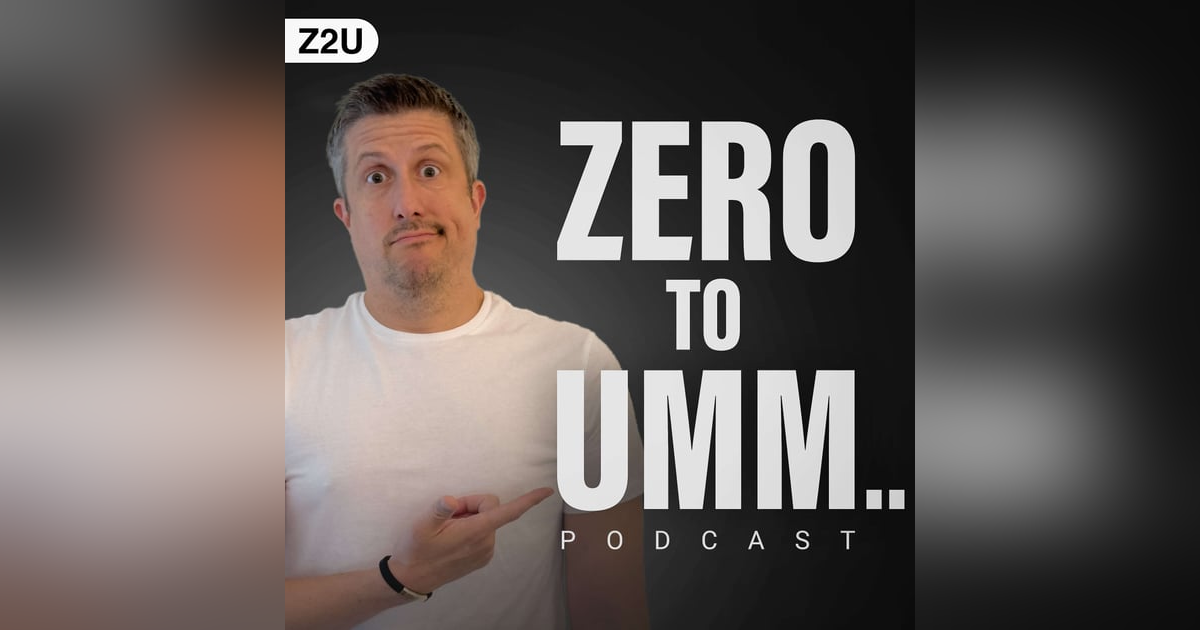
Andrew Boos - Darwinian Ventures



Episode Stack: https://stackl.ist/4sSOZBB
Andrew Boos is the founder of Darwinian Ventures, a fractional sales advisory firm that builds go-to-market teams for early-stage B2B startups. He's also quietly investing in his own clients from profit, not a fund.
Before Darwinian, Andrew had a profitable exit at 24 from a startup that began as an ad exchange for China (yes, really), fell into post-exit depression nobody wanted to hear about, learned enterprise sales under a CRO with a $4.2 billion annual quota at a Sutter Hill incubation, blew his exit money trying to launch a quantitative hedge fund, and started freelancing to pay rent when law firms came knocking.
We talk about why a linear path to entrepreneurship is a privilege, what happens when your North Star disappears after an exit, how he built Darwinian from a solo 1099 gig into an embedded sales team that's worked with 100+ startups, and why he's now writing small checks into companies where he can see product-market fit before the founders do.
speaker-0: It was a disaster. lost all our money and you know, we're there for four or five months, ran out of everything. But the company did well. So we pivoted and moved to Palo Alto. We got into Boost VC, which is still doing great. And we were bought and we made money. We had a profitable exit, doing everything wrong and being completely clueless and incorrect about the parking.
speaker-1: I think we go through periods where we think I'm supposed to be at X place by now and I'm not and that sort of discontent can just last forever.
speaker-0: The side quest can take five years and then they finally like, having a linear path to entrepreneurship is a privilege. It's like some stars align, you should be grateful for. For a lot of us, it's not. Hey! Long time no see, I can't hear ya.
speaker-1: Let's say check, Well, hello. â we got dueling mics. This is how we're. All right, that's a very interesting point. We get the podcast voice going. That's right. Amazing. Well, thanks for taking time and coming in.
speaker-0: Now I gotcha. Okay, there we go. Hello? Yeah, thanks, man. This is exciting. I don't do a ton of these, so I don't have much of a podcast voice. I get to practice it. This is great.
speaker-1: yeah, no, you've got the setup. You've got the view. Look at that. That's quite the view. And I think I can see where we had our blue startups party. I think it's like right
speaker-0: that,
speaker-1: Amazing. â It's interesting before we get into, â you know, into your venture, I'd love to like, I guess start out that the idea, you know, from a zero to un perspective, we, I say we had happened sometimes, I really just started when I started Sacklist, I started thinking about the journey because you, from an entrepreneurial perspective, you decide you get this bug in your brain. like, you know what, I'm going to do a thing. And from that moment, it's so interesting, you know, how there's no playbook. There's no like, you know, you've got so many opinions and so many ways that you could go. and â so I'm interested, you know, about hearing some of those really sort of early, â early moments in Darwinian, but also like prior to that. like starting with, guess, just your history and growing up, like, you, were you in an entrepreneurial family? Did you have like, did you always have sort of like an itch to start something or did you go traditional and then sort of veer or, you know, like where, where does the kind of the entrepreneurial side of, of things start in your history?
speaker-0: Yeah, that's an interesting question. It's definitely very core to who I am. I remember being super young and just even just in really subtle ways. Like my friends' dads who I looked up to the most happened to be business owners. Even if they were like small business owners, they owned a furniture store, you know, whatever. I just thought they were the coolest people ever. And I looked up to them. â My dad was decently entrepreneurial. didn't, but I guess the big thing and that kind of shaped my approach is that he didn't have a lot of ownership, but he like, came and started a brand from nothing and built a whole business as the creative person, but the ownership was elsewhere. So that kind of stuck with me. That was pretty close, but I wanted to go to the next level and actually own the thing and really have it. Even if that meant I had to start a lot smaller and grind it out way harder and go without things for the first couple years of my career. There's one kind of also just really fun nugget. I'm from this German family. We've been in, well, I'm Canadian. We've been in Canada since my grandparents, like since the fifties, but, â a long time ago we were German and we're part of this really extended family in Europe. track their family trees a lot more intensely. So, â I'm descendant from this cement tycoon and, â the fun fact is that the statue of Liberty is based on my family's cement. Now we're like six generations away, six, seven generations. don't, we didn't inherit any money really from it, but. Um, it's almost like a history club. Like there's all of these 300, 400 people that are descendants from this person in Germany. And some of them still have some inherited wealth, like some of it, but like after six or seven generations, who knows? Anyway, as a young child, I would go to these and it was really powerful for me. said, okay, well, this person figured out how to build a big successful company and we're having like big celebrations. 240 years later or whatever it is. the nieces and nephews are bickering over their allowance, like because this one guy just killed it so like heavily such a long time ago. So, you know, as an eight year old, that was like extremely â profound for me. And it was also really interesting. It gave me a chip on my shoulder because I had these cousins who were like extremely wealthy and we were just kind of not just because my great, great grandparents like made a bad decision. So it was just a really interesting kind of like, like it gave me a glimpse of what The impact can be if you do it well. And between that and my dad's experience, I just always really wanted to be a business owner and a founder. So I got into it, I guess, as soon as I could possibly make it happen. Like I'd founded a company in firm room. was running little businesses in high school. I was selling like snacks and chips and like mowing lawns and stuff like that. Like just always doing something like that.
speaker-1: Nice, that's great. I love that. â Yeah, it sounds similar to, I guess, growing up. It wasn't much entrepreneur. My dad started his own practice. He bought a building and was a doctor and had his own practice for like 40 years. mean, essentially, he was in residency at a hospital â and the chief surgeon came in one day. I mean, this was like 50 years ago, but he's like, chief surgeon came in and was like, all right. here's the medicine we're going to start telling everybody they need to take today or whatever. And he was like, â no. So he left and he and he bought a building. He started, you know, and I think I've, I've, I've always had, I've always had some of that in me in terms of, you know, one to break free from whatever the norm is. say it is, but, â I love that. I love that that you also recognize that it was not only like, It had been in your past in your lineage, it had also been not â and sort of seeing and recognizing both of those and sort of having the young, you know, decision of like, think I choose to go down the path that is, you know, sort of led to the base of the Statue of Liberty.
speaker-0: Pretty cool. Yeah. Yeah. was really, I was like, heck haven't we done this in 200 years? I was kind of like, flabbergasted. It's like, what's up with you guys? Like, just go do it finally again. Yeah. I went and decided to go do it. That's kind of how it started.
speaker-1: So you went to school. Where'd you go to school?
speaker-0: I was, so we were homeschooled for a little bit and then I went to high school in Canada and then I went to McGill in Montreal. So in French, French Canada and Quebec. And I decided that I hate the winter and I moved down to San Francisco right after. And, um, yeah, I don't really like school very much. I was happy to get out.
speaker-1: Me too. I couldn't, I couldn't like, I was the one that was always futzing with the TI-85 like, you know, like the, the calculator and like trying to get it to do stuff. There was one kid in my class that had like Mario running on his TI-85. â Totally, but like please recite this back to me. â You know, I was just like, I want to go build something. â That's cool. did, where did like, you, you, you realized like you were selling snacks. You had, you had startups like in your sort of dorm room, like once you moved â to San Francisco, what did you start in on right out of the gate?
speaker-0: was, it was kind of disjointed. So I got into this business program at Stanford Business School, which sounds all elite. It wasn't a degree though. It was like a, it was like a summer Institute sort of entrepreneurship thing. But you live there and I had never, man, I'm from a blue collar family. Like I had been a bus boy for five years. I didn't know any of this stuff existed. I had never been to the West coast. I was very excited and proud to have gotten into the program. And I asked my mom like, Hey mom, I need a visa for this thing. And she told me that I was a citizen. I didn't know this, but I had been a U S citizen the entire time, even though I had been in Canada. So all of sudden I was like, all right, okay. Like day two in California, I was like, this is pretty damn awesome. I'm going to probably just stay with the rest of my life. I hated the winter.
speaker-1: a lot of paperwork and a lot of years that I didn't
speaker-0: Yeah, like I was just like, this is better. I'm going to stay. and, and it answered my question around like being a business owner. There's like a whole culture here about being a, being a founder and being an entrepreneur and starting businesses. There's like materials. You're not so lonely. You get some friends here. There's like a whole thing around it. So it kind of answered a lot of my questions. I was very seriously thinking that I was just going to be a bus boy at a restaurant until I could save up and buy a little cafe. And then I might have two cafes and like, that was kind of my life vision. at the time because it all I knew. was like 20 years old. So yeah, I did this thing at Stanford and that changed everything. And I had to do one more semester in Montreal and then I just moved down and stayed. And I had a startup in my dorm. So basically I went back to McGill all full of this idea, like this whole idea of Silicon Valley and â just immediately made
speaker-1: Everyone back there is like, â no, he's drunk on Silicon Valley.
speaker-0: Yeah, that was a cliche.
speaker-1: That's amazing. That's cool. So then you came back and did you work as a startup or did you start like you already had something running and you just took it further?
speaker-0: No, we were kind of too naive to even know how clueless we were, which was kind of useful. So we started this completely silly thing in our dorm rooms. We wanted to build an ad exchange for China. We thought we could take ads into mainland China. This is the craziest idea. can't even believe we thought this would work, but.
speaker-1: I don't know where that started though. was like sitting around the couch, watching, you know, like â watching TV and someone's like, I got an idea.
speaker-0: I had two engineers, one was Korean and one was Chinese. And the Chinese guy, this is also just so naive. He was from Hong Kong, which back then was very separate, but he was like, yeah, we should launch in Beijing. I was like, awesome. And then I did all my little contentious business school thing, and I built a business plan and researched it. And all I was doing was trying to keep reassuring myself that it was brilliant. And so we raised money from this little accelerator program that still exists. It's for helping Western. Founders launch in the East and it was a disaster. lost all our money and you know, we're there for four or five months ran out of everything. Um, but the company did well. we pivoted and moved to Palo Alto. got into boost VC, which is still doing great. Um, we were cohort two, this is like 2014, some 2013. Um, and we were bought and we made money. We had a profitable exit. Um, doing everything wrong and being completely clueless and incorrect about the market. But when we pivoted back to work to do it in the US, our product work better and we knew a little bit more about the industry and the landscape. And so we were able to make it work from there. Pretty crazy start, not a linear start at all. â
speaker-1: But I like that. mean, that is the process. feel like there's this whole sort of like, you know, â there's a playbook and you just have to follow the playbook and it's pretty straightforward and like, and really it's not like it whatever works for one company doesn't work for the other. And really you need to learn those, you know, a lot of experimentation and then learning when to sort of pivot and when to like, and when to listen and when to sort of back up when to go fast. but I love that it wasn't that it was a nonlinear path, but you, found, you found y'all's path, especially to an exit, which is amazing.
speaker-0: Yeah, I mean, I guess if you're born in Palo Alto and you like get into the Stanford's of the world, like it's pretty linear. Okay. Drop out, go get in the white Combinator. Like there is a linear.
speaker-1: There are shortcuts. There are shortcuts.
speaker-0: Like I meet all these people from the other side of the planet don't even speak English like there's no such thing as a linear path like they have to figure out how to get their green card and they have to learn the language and they have to do all these like side quests. The side quest can take five years and then they finally like it's a whole like be having a linear path to entrepreneurship is a privilege. It's like some stars align that are you should be grateful for if it was linear. â For a lot of us it's not. Yeah.
speaker-1: Totally. Amazing. So, okay. Well, then, so your first one out of the gate, you had an exit. And then what was day one like post exit? Were you like, all right, what happens now?
speaker-0: I have a whole rant on that. It was obviously a wonderful thing. It wasn't a life-changing thing, but we were 24. mean, we were really young and we made a couple hundred grand. At the time it seemed like everything. I mean, we had lived on... Okay, so here's some numbers. There were four of us. We raised $185,000 total and we lived for three years on that. So you can do the math, like we were not baller. â We were like going to networking events just for the snacks. we were basically.
speaker-1: Who's got quarter beer on draft at four o'clock on a lake?
speaker-0: Like I had a Prius that my uncle let me use. could barely put gas in it. You know, it was me meager. Now we had a great time. We didn't give a shit. We had just been in college where you're broke anyways. you know, whatever funding we raised just went to pay for rent. So we rent a house and we all worked out of the house. It was kind of like the, you know, the Facebook movie, but without the progress montage. â And we were actually two blocks from that house. We were in that neighborhood. â There were six months and then we moved somewhere else, moved somewhere else. We were in bunk beds for awhile. Like it was pretty meager. So anyway, so we, yeah. So when the day had happened was extraordinarily joyful. were very happy and accomplished, but the really weird thing was the very counterintuitive thing was, â Something internal was gone. I don't know. It got pretty bleak pretty quickly to live inside my head and even my founders too. We all kind of felt that it was odd. â
speaker-1: Was it like the ambition now, obviously, and the drive to build something and to like, was it the thing that you had built sort of gone away and now you were driftless or was it like, what was the sort of like, â what was the push and pull there?
speaker-0: That's pretty much, yeah, that's the best way to describe it. I â you know, I'd been so used to being at war all the time. Like I had these three other people who I had convinced to change their whole trajectory and like, it didn't seem like it was going to be okay. And like I had raised money from people. I was like a young kid. I really took it very seriously to have other people's investment, even though it was all so small. To them, it might not have been that small. And like I was in this kind of semi, â traumatized coping state because it looked like we were going to fail. So we were like really scraping, but I couldn't give up because I had told everyone it would work. like, and so when it all finally clicked and we did the deal, â obviously a huge relief. â but then very quickly, you know, the, the, the, the jarring, like the North star was gone and the North star was so clear as jarring and brutal as, as the existence had been with that North star. when the North Star was gone, it was like, â I had never had anything like that in my life. And I had some dough, you know, it wasn't anything crazy, but at the time I had never had more than like hundred bucks in my checking account. And so, you know, had a couple, you know, some cash to spend and it was just very, very jarring. Like it was very jarring. I was actually quite depressed. There were months where I would like go to bed early just to be sleeping. Cause I just wanted the time to pass. Like I didn't have, I didn't have a, like it was. bizarre. And obviously no one's going to listen to your sob story because they all think that you're this like success story now. So you're it's pretty lonely to like all my friends came asking so loans. didn't really have enough to really make meaningful to do anything for any of them. But like I don't know. It was just a very weird disorienting time. I bet very.
speaker-1: You know, I imagine, you know, when I've had ups and downs, like I've had periods like that in our startup, but also in other periods when I've been in other, like, you know, I've been in big consulting firms and agencies and stuff like that. And I'm just sort of doing the things you're supposed to do in that position. And there's this whole other side of my brain that wants to like activate and go do stuff. And then, yeah, same thing. It's like, I just want to nap and watch Netflix and I just want to like curl up and But you're trying to figure out, but, you know that something is missing. You know that there's, there's some major part and to basically run a sprint and just like see what you're made of and to run so hard. then basically to stop, wake up and go, I guess I should get some breakfast. Like, you know, and, all of that, all of that stuff. is is gone is is also hard because then you're inside your brain you're going well who am I what do I want what do I do what am I like what am I for what am I purpose â you know I think your brain goes I'm having a hard time with this
speaker-0: Very much so. Yeah, it was a struggle and it was not a like fun time either. Like I was pretty depressed and I've heard others talk about that It's so counterintuitive and no one has any tears to shed for you because you just had like the one thing that everyone strives for But like it can be pretty disarranting and pretty unpleasant when you when you lose the North Star and the war is over Yeah
speaker-1: Totally. Well, was the path? When did you start emerging from that? And what was the spark that went into the next thing?
speaker-0: I mean, from there I started working. mean, the engineer stayed with the company. stayed for a short period of time that bought us, but I moved into a incubation of a much bigger and sort of more accomplished group of founders. So I was like the first non-founding engineer, or sorry, non-engineer, â sort of founding team. â and that was the beginnings of where I started learning, go to market and like proper B2B selling. And like, that's where my whole career kind of took shape. So yeah, when, when that sort deal closed after a couple months. I moved into this company. was called Skyport Systems. It was done by the Sutter Hill team. So they're absolutely incredible. they, you know, very early in Nvidia, they incubated Snowflake. You know, they're just known for taking really big, long-term, well-capitalized bets and building really great teams. Like they have a program. It's almost like the NFL's like scout program. Like they'll find PhDs as they're in their formative years and they'll like court them to found companies. it's like, And so I was really honored and privileged to be a part of that as a, as a young kid. Um, and they were a cybersecurity company. sold into banks and institutions. They were, you know, really well developed, had plenty of capital and they had poached. They brought the CRO over. It was one of the best CROs in the world. Um, his name is Rick Hansen. He's in Boston. He's killing it. And he's at a huge company right now, but his quota before we got him was $4.2 billion a year. So he had been the worldwide head of HP's software arm. So if he didn't put $4.2 billion cash in the bank every year, he was fired. So he's one of those guys, like he's seen every scale he can possibly imagine for B2B selling and managed entire regions and teams and thousands of people. So I was his right hand. So we set up all the territories. We hired a huge team. We got them up to about 10 million in annual revenue. â And they were ultimately bought by Cisco. â And that's where I learned everything. So Rick is still kind of echoing, his voice is echoing in my brain like every day. â because, you know, all I really did since that, from that point onwards was, â set up sales teams and set up sales systems and kind of do trainings and do, you know, â like building a whole practice around getting from zero to five and zero to 10. â So that was kind of the trajectory from that, from that exit. There was one other kind of attempt that also failed miserably. So I did do one other. attempted startup that didn't really work. But, know, I'll leave that as a blip. Really, I went to Skyport Systems, learned everything that I needed to know. I guess you could say trying that other company is where I like really realized I need to stick to what I know.
speaker-1: No way they gotta know like where how far off the the path did you were you like â I think I'm gonna get into â making cheese like what was
speaker-0: I would have been a useful thing for society. No, I was hanging out with a with I got introduced to it was just very infatuated with the world of high finance and I was I was introduced to some PhDs who were doing like a quantitative trading thing and â And it was incredible like they had great numbers they were trading with real capital it was all like large Cap public stocks. It was kind of like moneyball for index funds. I guess you could say â It was using AI way before AI was so common. And I just really loved it. And I felt invincible. I felt on top of the world and had some cash sitting around, which I immediately made completely disappear on regulatory and compliance and legal and like all this nonsense. â thinking I could launch a quantitative hedge fund as like a 25, 26 year old kind of hotshot, â with not a lot of network in the like billionaire community. It doesn't always come down to how good your quant stuff is, it's like, can you raise capital quickly from people who have a lot of money? And I didn't really have that. So long story short, wasted a ton of dough, got very humbled and then started doing fractional sales advisory building off of what I had learned at Skyport. And that has become Darwinian. We've done a lot with that sort of learning. â that, you know, that little blip was just a very... annoying detour, but it was very humbling and I learned a lot. I know how to money on very fancy lawyers.
speaker-1: Sure you have lots of learnings. Oh my gosh. The only thing I can relate to that is during the sort of 2018 to 2020 staying up late and watching Bitcoin on Kraken and just not making good decisions.
speaker-0: Yeah, physically casino style.
speaker-1: Yeah. So really from that mentor on the revenue side and building startup teams, that's where you really got your PhD and like, here's what I'm going to go do that led into Darwinian. Yeah. How long were you there? the. Yeah.
speaker-0: Yeah, that's right. â At Skyport, I think it's three years, or about in 2016. â
speaker-1: And then did you have an idea of leaving and sort of starting to build while you were there or was it sort of after you left?
speaker-0: Well, yeah. So, the quantitative thing. So for the last couple months, I was like setting it up and getting to know these PhDs and spending stupid amounts on lawyers and KPMG and all that. â And then I left to go and do that. And I tried it for a good year. And we got some headway or like, I learned a lot. saw friends from it, but it just wasn't going to work. We weren't going to do the fund launch and the way these things work. If you can't raise $25 million, just to even just to get a little bit of the fees, cause you make your money, you actually pay your salary out of. management fees and whatnot. So if you can't raise 25 million, you're in trouble. Right. And we couldn't do it. I had to like, was quite literally struggling to pay rent and I was in debt and I started doing fractional consulting work and that was how that whole thing started. So I realized, okay, I actually know B2B enterprise sales team set up and management like really well. And most of my friends who are founders don't, they don't teach it at school and it's ultra pivotal to to making any founder successful. And so that was kind of the beginnings, but I just started as a freelancer making a couple grand a month on a 1099 to crawl my way out of debt.
speaker-1: I love that. mean, it's really that freelancing, sort of doing it on your own and is such a good beginning part or can be of so many different things like this is to be able to, you know, I always found that. even when I was at jobs or in between jobs, like just being able to sort of do those things and test those things on the side to see what they could be with some extra cash. But also, you know, in your case, like you just kept going, which is great. â When did it start to get to the point when you started to bring on more people, like in terms of a team and when you started to like when you switch from that like freelancer mode to like, â this is going to be a thing.
speaker-0: Yeah. Okay. So, all right. So for maybe a year I was just solo and what I started to mess with was, okay, I would say, all right, if I'm a contractor and I'm fractional, maybe I can take two at once and still make it work. And you get kind of good at how to do that without, â bothering anyone or without anyone feeling for change or short changed. So in fact, I think that was kind of the biggest thing in the first, maybe two years was that, â I would slowly learn how to take more work and like, be defensive of like not defensive, but structure my time in a way where I could still add a lot of value to multiple folks. And then I started hiring a couple of people here and there to do specific things. And then I realized, you know, I'm decent at hiring. Like I've hired some great folks and if you do it right, you can slowly kind of fire yourself from certain roles and â take another one, you know, and that first, the first couple of times we tried it, didn't. succeed. So we had a bunch of hiccups here and there. But then we finally, you know, we got it down to a system and, and, â I think there was a point when we had five people and I went to hire the sixth and I really wanted to work with them, but he wanted health insurance. And so I just went and put everyone on W2 and that was kind of when it all like chunk, like clicked into being a real. Yeah. Got them all on gusto. That was the big thing. It wasn't just a bunch of wires flying around.
speaker-1: Now we got a company.
speaker-0: Yeah. I'm going to direct deposit, W2, healthcare, dental, vision, like all that stuff. And it was actually great for everything on the business side too, because we, you know, I'd learned that gig workers are tougher to build a real business around. So like it was better to have really long-term focused folks where like the world, like their lives were sort of taken care of and they could plan for the future and have kids and all that stuff. And, and, and I just think. As subtle as it is, moving everyone to W2 and putting them on payroll, like actually was a really good thing for that. Otherwise we were working with other people that were trying to stretch things out and trying to work from the beach and in Bali and you know, stuff like that. So, â so that was kind of.
speaker-1: When you went from five to six, which was your inflection point to becoming a company, was everyone in the same? Did you have an office? Everyone was working together every day or was it all remote?
speaker-0: No, was all remote. now, sales has been remote since way before COVID. Like, usually have like, you know, a Northeast team and a Southeast team and, you know, there's the team in Seattle and in LA and all these places. even long before COVID, I'd just been used to running a team all over the country. And so that was pretty natural to us. We were pretty, we've always been really good at maintaining culture remotely and making sure people feel bought in and sort of, you know, get to know each other. And there's like, You can't, you can't quite, I'd always prefer to be in person, but â if you're careful about it, you can do a good job remotely as well. Nice.
speaker-1: So did the, you know, from six to what was the next sort of culture shift or dynamic shift? You know, you hear that like, it's like what five and 20 and a hundred, like what was your next sort of like, you know, or was it like â the size of clients or the number of clients? Like what was the next sort of, you know, moment when you went, okay, we just entered a new chapter.
speaker-0: I mean, it was pretty linear from there. We'd have some fits and starts, but for the most part, it was pretty linear. mean, we, think at our max, we were maybe 25. We did an incubation at one point where we had a startup that was sort of venture backed and that had maybe 15 at one point. So, you know, at one point we were kind of getting close to 40 and that was right in the boom time, which was, so COVID almost killed us. And then like 21, 22 are kind of our best years ever. because there's a lot of stimulate like a lot of investment in the economy and people would finally, you know, realize they still have to execute and do things. So that was kind of the peak peak. And, you know, then I started realizing it's not the most scalable business. It's got a really, really niche kind of value prop. Like it's really just startups. It's really just B2B. I'd say for the last two years, there's been a giant die off of traditional SaaS. And there's this new kind of crop of AI businesses, which don't quite have a business model is still kind of being figured out. â We've actually shrunk substantially. We're at around like 10 folks right now. But we're getting better and better. I mean, the cool thing is, don't have to like, almost rather be this elite small team of Navy SEALs than giant, you know, standing army. â
speaker-1: And even now, February 5th was the watershed day, right? Which was like Opus 4-6 and Clonic Code and these sort of things. And we've even felt it in our team, there's three. there's like pre-February where you still feel like you're three. And then there's post-February, which feels like there's two of us doing the work of six, which is just like, it's amazing. â
speaker-0: It's wild. Yeah, it's really cool. mean, so what? Yeah, good.
speaker-1: Like give a description for everyone that's listening and watching. It's interesting that your model for working services and working with teams, but you also do venture. It was sales and service and standing up sales teams first, and then you also kind of moved into venture as well, right?
speaker-0: Yeah, well, the reality of to that is just like, well, like, you know, I'm talking about painful realizations. we've done well over a hundred clients at this point where we've been in the garage with them and we're really, really hands on, like we're staffed, we're embedded. They're all in the U S like we're not like, we're really in there. It's not really an agency where you just throw things over. Like we're in there staffing, people hire our people all the time. Like our clients will just hire our team. â so, â What that means is we're really tight with the CEOs usually, and we're really early. Now, fast forward to 2023, 24, we had three unicorns and we were in the garage with the CEO and we didn't get a single share. you know, I mean, obviously grateful to have worked with them, love those guys, all wonderful, da da da, but like, the hell? Like if only we had like either had a couple bucks or. ask for equity compensation. Now I did try and it doesn't always really fly because we don't have high margins. So like, I can't discount much. it's, you know, sometimes I'll get a little bit of advisory equity, but I remember at the very beginning, I didn't even really try. I didn't bother. was just like, Hey, we'll get a little bit of margin, get good at our jobs. You know, that's fine. Such a silly, like I wish I had had a little more thoughtfulness and long-term vision. Um, so anyway, so three years ago, We just started writing small checks and we don't have a fund. It's just from our profit. So we'll write little 10K. Although I think the biggest we've ever done is 100K. But to us, that's massive. So most of them are down in the 10 to 25K range. â But it's incredible. We have really, really intense information. And I mean, they're private companies. have insider information. whatever you want. But they're private. We know exactly what's going on in there. yeah, like hell yeah.
speaker-1: You know how resilient the founding team is. You know how fast it's sort of they're adopting what you're building from a sales perspective in there. so yeah, being able to sort of see the how the sausage is made, I'm sure is like, okay, now, you know, I'll put put X amount in.
speaker-0: â yeah, like we'll see product market fit sometimes before the founders do, cause we're out there researching and cold calling them. Like a lot of the founders, when we find them, they're so early that most of their interactions are with their friendly group. â and we'll be the first ones to go to the very hardcore strangers that don't care about them at all. â and get the cold shower of rejection, you know? So, so we would get really, really good information. And so we started investing and that's been doing really well. So we're not really professional VCs, but I would like to raise a fund and our track record is phenomenal. And I could even say that our phantom track record of all those missed opportunities is even better. But I think we're onto something and it's a pretty unique thing in the VC world to be able to really change the sales team's trajectory and then get in when the trajectory is really strong.
speaker-1: It's a little philosophical, but could you also, could you see yourself down the road sort of, you know, trading and handing off the service sales side and, sort of, you know, going down the VC route as a fund off, off the side of this? Yeah.
speaker-0: You could, I think about that a fair bit. mean, on the one hand, like the VC business is just much more scalable and, and lucrative. â Like the services business is tough. So yeah, on the one hand, yeah, I could see that making sense. On the other hand, it's kind of our whole unique edge. There's a million little VCs out there and they're all identical. I've raised from them. It's silly. Like very few of them have a lot of really applied. expertise or knowledge or instincts. â And they're kind of just retailing money from the same group of LPs and that's it. So I tend to really be proud of our edge. think we have way more like our care. have calluses on our hands and we it's very real time. We know exactly the tools that suck today and that are good today. And we know the markets that are doing great and all that. Like we get really good Intel and like instincts around which founders have the right attributes. Now you could argue a lot of that you could still maintain even if you aren't in the business anymore. I don't know. It's kind of a bit of a TBD.
speaker-1: It's interesting because I could see that. know and I've seen those. You see those teams not as often, but you do see the teams that. Not accelerator teams, but VC teams that really are smaller and are and get embedded like you do with the sales teams and sort of you know and and really sort of see that like no, no, no, stop that. Don't do that like I'm telling you like this. Let me give you the tools and they set this up, you know, and then see if that works like. And those embedded teams, how well that can work when the investment team wraps their both expertise and services and network around a company. That's cool. What do you see in the horizon for the next, with how things are changing and AI and agentic and data and what do you see for your teams in the evolution of selling and building teams?
speaker-0: Yeah, it's a question. It makes it really hard to think about what on earth, like, like I've been a product founder before. I often thought I would go back and just be a founder CEO again. And, and that this whole services business was just a way to keep the weapons sharp and like get ideas. But I don't know what the hell I would found right now. Like it's so hard. You can prototype anything in a week and you know, it's really, it's really wild. So I'm just. kind of keeping a really close eye on where the leverage is gonna go. So like if engineers are losing leverage, like does that just straight up mean that sales and marketing gain it or is that also now so easy to do?
speaker-1: Maybe, or you get hybrid teams that you get somebody who was a coder but also happened to be in sales. You get these strike teams where it is like you get somebody who was fantastic at designing and did great in Figma and Webflow and Framer, but then all of sudden dove in and understood the front-end mechanism so well. You just start fusing some of these things. And I think it really comes down to, it feels like the roles are blending so much that really you just get the people who want to sort of learn and absorb and try, you know, and pivot â so much the sort of like experimental teams who are willing to sort of go experiment versus the sort of rigid, you know, I am this and I needed this to help me do that â kind of thing. So.
speaker-0: Yeah, I think that's right.
speaker-1: The very interesting moment that we're in when all of these different writing, prototyping, service design, sales, customer service, you think about all of them and how all of them start to take on different shapes than it used to be pretty straightforward in the slots that you needed to be able to service â a business.
speaker-0: Yeah. Yeah. Yeah. So I guess, like, I don't know what I would found. I like the world that I'm in. Like, I do think we're building a lot of value and we're building a great portfolio of equities and, you know, keeping our weapons sharp. â but it's, yeah, I don't know what the long, long-term vision is. â I think, I think I could see a really interesting world where, like I've always admired Sutter Hill. So Sutter Hill is incredibly good at long-term thoughtful incubation of companies. There's a couple other ones too. There's endurance, there's eight VC. There's a few other VC shops that have like real operator first sort of build programs where they're actually like really kind of structuring and building and founding a business. I would really enjoy that. I think that would be really fun. And I think we have a really interesting play there too, because having done go to market a hundred plus times, every market you can like every industry, every vertical, like we've done so much. â if we had good capital backing, could see us doing a really unique and differentiated version of that. â where we're almost, you know, you could build a company, but from the demand first. you could kind of first see if the demand was real using our go-to-market prowess, even in advance of having much and then, and then, you know, quickly prototype and build and launch something like that. don't know. There's, there's, that's been something that I've been playing with as a, yeah, it's
speaker-1: Interesting that to think about with the skills and expertise and now how far you can go in terms of building, you know, agents that can also do this, but baking in everything that you sort of learn from a context perspective and knowledge, you know, historically for the team and then being able to go do that and and almost way quicker get signal back than any other time that you could have done it. But then when you get the signal back, it's y'all's team. I imagine that from an expertise perspective would be able to. to then say, here's what I think we should do â based on what we've found.
speaker-0: Yeah. Yeah. That's cool. Yeah. It's interesting time. It's kind of a TBD, but
speaker-1: Yeah, amazing. Well, what's one thing that you've like, do you have either a tool or service or something that you've you've come across or you've been using these days that you, you know, that you really like or that you recommend in, you know, when you're standing up teams and consulting?
speaker-0: Yeah, it changes so quickly. Yeah, there's a bunch of great tools out there. We're finding a really interesting disruption of the lead data world. So the Zoom Infos and the Apollos are kind of, like Apollo came up and started eating Zoom Infos lunch, but now they're all getting just kind of clawed down by a ton of cheaper upstarts. So there's some interesting new ones out there. Cred is an example that we were closely with. There's a couple of others. â we're seeing, like this concept, there's one concept that I really like that we've been using for a lot of our setups. â it's this concept of listening. like social listening. instead of like building static lists, researching and trying to figure out who you want to go after just in a static way, you kind of have an ongoing trigger. So like listening. So it's actually looking for that data point being revealed in real time, and then you can maybe chase after somebody. So The most basic example is if someone comes to your website, maybe you can reach out to them. Like there's little things like that, but I think more way even higher order above that. â the transcripts thing. So the transcripts of all of your calls are just this people have sort of known to collect them now for a while. It's like pretty normal to have a note taker on a call now, but nobody like you're realistic. Nobody ever touches them ever again until Only just recently I've started messing with this and it's insanely powerful. If you put all your transcripts together into an LLM, you can answer any question imaginable and it's really powerful and it's backed up by real words that people said and like it's easy to make it referenceable and citable. â
speaker-1: Well, for customer insights, for also for sales calls and then being able to pull out what was good and what was not. then, you know, for for customer training, able to pull out signals. â Granola is great at at being able to â you could chat with all your calls this week. You know what mean? Like what were the biggest signals that came out this week or what are the priorities that I need to think about? But I think underlying what you're saying is I've really noticed this And I wrote an article a couple of weeks ago about this, about like, think markdown files are the new oil. Right? Is that you get this like, there is this very compact, interesting insight sort of portable thing. And if you don't know what to do with it and you're just like, I'll just put it in that folder. But if you do know what to do with it, you can take a bunch of these things and put them together and then put it into a model and work on it. and what you get out is just like amazing.
speaker-0: Yeah. Like I know a company where they took, it's like 750 calls. It's like all their customer calls to date and it's queryable. They found a way to do it. Like normally that would break most OMS if you upload that many PDFs or what have you, but they found a way to do it and they can pull 700 plus calls. And so it's incredible. You can ask anything. You can say, Hey, what are the top five pushback? Like, like, like what, what features are the most well-received? Which ones are the ones that, that get pushback or like pricing? Like, it like, me about, like you can ask anything. You can even ask. Which of my reps like needs work or like give me some notes for like such and such and it'll and it's incredible and it sites it and it's really cool. So I haven't found a tool. I'll check out granola, but I don't think it's actually like, think it's an, it's a really interesting problem because in my view, all you actually need is the written transcript. All the different tools have different summaries, but I don't really care about that. I really just want the raw transcript. The challenge for me is how do you get hundreds and hundreds of them? into one context window. And this company found a way to do it. It was very duct tapey though. They had to wrangle a bunch of stuff together and put it into chunks and like put it in an index file. And I'm not technical, but they used those big words and they did it. It worked. I wasn't able to do it without real engineering work.
speaker-1: There is a way and I'll show you. actually did it. I did a bunch of research recently where I basically ran five different prompts across Grok and chat, GBT and Claude and perplexity and Gemini. And then each prompt came back with like 50 pages of information. And so I took all of those plus the summary of, so I've got about like 80, you know, sort of like outputs, put them into Claude code and essentially build a â a prompt for Claude code that says you are a race. You're an expert research synthesis, you know, and so the difference with Claude code, if you do it like on web or desktop or things like that, you're going to run into these things where it's like, please don't have more than eight files. But with Claude code, you can basically say here's a directory tree with all these things in it. I you to go through and here's how I want you to approach it. And then I want you to come out with the final.
speaker-0: nice.
speaker-1: And it gave me like a 40 page document that breaks down like competitor analysis and like, and all these sort of things. So you can almost build your own little research agent with cloud code, but it doesn't actually have to be code. Like you don't have to code anything. You just have to sort of do it in this, â in terminal, which most people don't sort of live in, â on their computer. But once you get used to it, you can really just talk to it like cloud, but it has so much more opportunity to be like, Sure, I'll look over your 80 files, but give me a minute, you know?
speaker-0: Yeah, I want that like that sounds yeah
speaker-1: Totally, we'll have to do a session. show you. Once you start unlocking that, the other thing I did was I hate building presentations coming from the Deloitte Accenture worlds and things like that and building presentations. I have it now where basically my Claw desktop, I tell it what I want and it gives me a markdown file and I put it into my presentation agent and it goes, hold on a second. 92 seconds, it spins up a presentation in gamma. and says, here's your presentation. you're like, amazing, thanks. And then you just email it off to someone. So the tools are getting so fun. Amazing. Well, thank you so much. One thing I would love to know, going back to yourself either, and you can pick either point, before coming to San Francisco or when you were in the Valley of sorrow post exit.
speaker-0: Yeah.
speaker-1: For either one of those versions of yourself, if there's anyone listening that are in one of those moments, what would you say now looking back â as an approach to either to take getting into things wide-eyed or to find your way out of something?
speaker-0: You mean, I guess like back, back when I was like a small town kid in Canada or yeah, when I was a kind of an unjustifiably like I was like thought I was top of the world, but it turned out to be.
speaker-1: yeah. Yeah. Like on if you if you could just you had five minutes and you could just beam back for a second be like, look, I got let me just say this really quick. Like what would you what what is some of that advice that you would give one of those versions of yourself?
speaker-0: You know what? mean, everyone says life is short. I think life is actually pretty long. And when you're young, you always feel like you're almost at the end of it, which is really weird. So like, I remember when I, maybe this is just me, I don't know, but I always thought like, and Silicon Valley doesn't help with this by the way, but it's like, you you gotta be really accomplished by the time you're in your late 20s. And if you don't, you're cooked. Yeah. There's like a lot of that. There's this really huge pressure to be like the young wonder kind. â and I wish I had known earlier that it just keeps going. Like, you know, there's going to be ups and downs. You're going to go through some really terrible stuff and you're to go through some really great stuff. Sun just keeps coming up the next day and like, might as well think long-term and don't think that it's a really big deal if you know, you hit, you know, whatever it is, your late twenties and you're not Mark Zuckerberg or what have you, you know, Um, like I see that with a lot of the young entrepreneurs that I speak to and, um, you know, a lot of them think that they're like, nobody's because they haven't had this huge exit by the time they're 25 or whatever it is, you know, just the sun just keeps coming up. Like you're going to be around for a while. Like just get comfortable, think long-term, make long-term bets. Don't think that any of these wins or losses are really that defining. Um, and, and just keep chopping wood and, and, and, and try to be positive about all of it. I mean, the other big thing is just don't like, like, I always thought that the biggest thing to look out for is more about, um, uh, idleness and complacency. So even in the good times and the bad, just keep active, keep doing things, have some humility. I think that's, that's really key. think that that would be what I would say to myself in either those scenarios.
speaker-1: That's great. That's great. And you're right. does apply to both. â I we go through periods where we think I'm supposed to be at X place by now and I'm not. And that sort discontent can just last forever because the bar never, you never actually just sort of catch up to it â wherever you are. that's good. I love that. â Amazing. Well, thank you so much for taking the time and â sharing your history and the Darwinian journey. And I love that where you're at right now and the successes that you had came from, boy, I better start freelance. â
speaker-0: I love that. Yeah, that was a roller coaster, man. It's like, yeah, that was crazy. Had to start freelancing because the rent was due and I had law firms banging on my door for like 50, 80, 100 grand. I was like, gotta figure it out. Yeah, yeah, yeah.
speaker-1: It's, you know. You got a Salesforce tower right behind you. That's good. Well, amazing. appreciate you coming on.
speaker-0: Cool, yeah, great, thank you.


